
5.00
(5 Ratings)

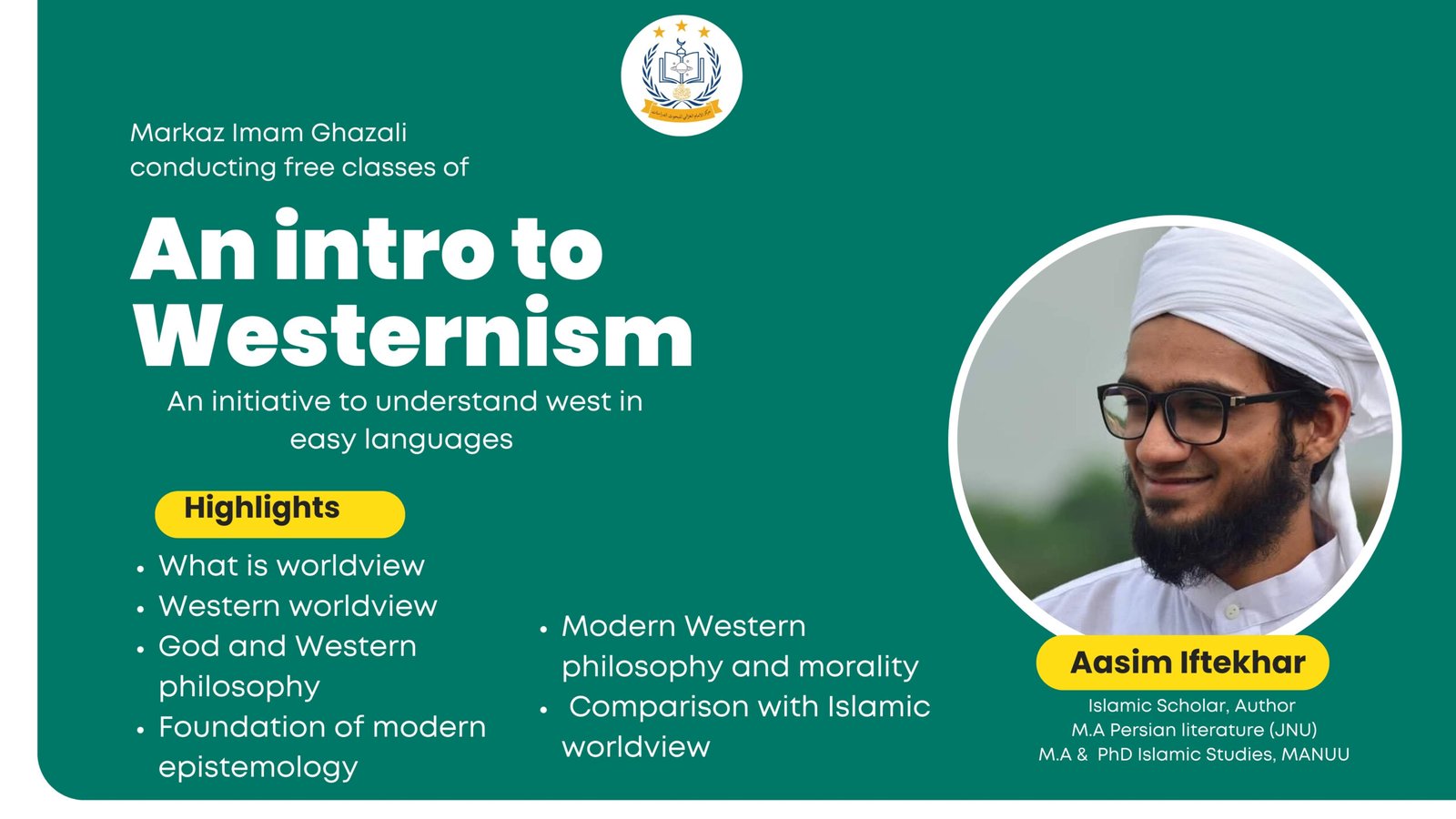
An Intro To Westernism
Uncategorized
Wishlist Share
Share Course
Page Link
Share On Social Media

About Course

This online, self-paced recorded course introduces learners to the central ideas and debates of modern Western philosophy, while providing the essential classical background that shaped them. Beginning with a brief exploration of Greek and Roman thought Plato, Aristotle, and the early Christian philosophical tradition, the course quickly moves into the intellectual revolutions of the Renaissance, Enlightenment, and modern era.

Students will explore key thinkers such as Descartes, Kant, Hegel, Nietzsche, Marx, and contemporary philosophers, examining how their ideas have influenced Western culture, politics, science, and ethics. Topics include rationalism and empiricism, liberalism and secularism, existentialism, postmodern critiques, and the impact of Western thought on global discourse.

Alongside lectures, the course incorporates visual presentations, guided reading lists, and optional discussion prompts to deepen understanding. By the end, learners will be able to:

  • Recognize the historical transition from classical to modern Western philosophy.

  • Explain core concepts and arguments of major modern philosophers.

  • Critically assess the cultural and ethical implications of Western philosophical traditions in today’s world.

Format & Requirements:

  • Delivery: 100% online, recorded video lectures (accessible anytime).

  • Resources: Downloadable notes, recommended readings, and quizzes.

  • Assessment: Short reflective essays or self-check activities (optional).

  • Prerequisites: None, ideal for students of philosophy, history, cultural studies, or curious learners seeking to understand the foundations of Western thought and its modern expressions.

Show More

Course Content

What is world-view?
A worldview is the deep framework of assumptions, often unspoken, that shapes how individuals and societies interpret reality, knowledge, values, and purpose. In your book, you explain that a worldview is not merely a collection of opinions but the lens through which every aspect of life is understood. Science, ethics, politics, art, and religion all operate within its boundaries. From your perspective, Westernism represents a dominant modern worldview, built on philosophical developments from the Renaissance and Enlightenment but rooted partially in classical Greek thought. You emphasize that understanding worldview is essential to grasp why modern Western philosophy diverges from traditional religious frameworks, especially Islamic thought. The class introduces: The Nature of Worldview: Its invisible yet powerful influence on reasoning, morality, and culture. Worldview vs. Opinion: A worldview is foundational and affects even how evidence or logic is evaluated. Westernism’s Lens: Modern Westernism interprets human purpose, freedom, and progress differently from classical and Islamic paradigms. Critical Awareness: By recognizing worldviews, students learn to evaluate Westernism critically rather than unconsciously adopting its assumptions. In short, a worldview is the underlying map of reality. Without recognizing these maps, one risks being guided by hidden presuppositions rather than conscious, deliberate choice. This is a key idea that sets the stage for the rest of your course on Westernism.

  • What is world-view?
    38:10

The Parts of a world-view
In this lesson , we will learn that a worldview is not a single isolated idea but a composite structure made up of interconnected parts that shape how a person or civilization understands reality. These parts include: Metaphysical Assumptions (Reality and Existence): Beliefs about what is ultimately real, God or material nature, spirit or matter, transcendence or immanence. Epistemology (Knowledge and Truth): The criteria for knowing, whether truth is revealed, discovered through reason, constructed by society, or reduced to empirical observation. Anthropology (Human Nature and Purpose): Ideas about what a human being is, their dignity, purpose, and moral responsibility. Ethics and Values: Standards for right and wrong, justice, and what constitutes a good life. History and Destiny: Interpretations of human history, whether it has a divine purpose, is cyclical, or is merely random progress or decline. You point out that Westernism reorganized these parts, replacing transcendent metaphysics with materialism or secular humanism, privileging human-centered reason over divine revelation, and redefining ethics based on autonomy and utilitarian progress. Recognizing these parts helps students see that adopting even one Western assumption, such as a purely materialist view of science, can quietly shift their entire worldview. The section concludes by urging readers to examine each part critically and consciously, so they engage with Western thought from a position of awareness rather than unconscious assimilation.

Ontology (علم الوجود )

Epistemology (علمیات )

Morality (اخلاقیات )

Student Ratings & Reviews

5.0
Total 5 Ratings
5
5 Ratings
4
0 Rating
3
0 Rating
2
0 Rating
1
0 Rating
MA
4 months ago
Amazing and very useful for ummah
Allah bless aasim iftekhar bhai
Allah aap ko isteqamat de
AC
4 months ago
Ye Bhoot hi faiday mand rhay ga k ham aik kitam aik alim ki sarparasti mein sikhein our smjhein ۔ kisi ideology par kuch kitabein ese hi padhai jain to bhoot faiday mand trika rhay ga, unko khud bi baad mein revise kr sktay hein . Ye ppt say bhoot faiday mand trika ha . Jazakallah khair wa Ahsan al jaza Mufti sahab Allah aapki umar mein seht mein, maal mein barkat day ..
AK
4 months ago
Bahut hi umdah mashallah
SA
4 months ago
It is thoughtful, well-structured, and eye-opening course that offers much more than its title suggests. Rather than simply presenting dry facts, Ustād Aasim Iftekhar builds a clear narrative that helps learners understand the historical, philosophical, cultural, and social currents that shaped Western thought.

Ustād deserves full credit for making such a complex subject both accessible and inspiring. Highly recommended!
AW
4 months ago
"مجھے یقین ہے کہ یہی کورس میرے سیکھنے کے سفر کی بنیاد بنے گا۔ یہ پہلا زینہ ہے جس پر قدم رکھ کر میں آگے بڑھوں گا اور اپنے علمی و عملی مستقبل کی راہیں ہموار کروں گا۔ میں اُمید رکھتا ہوں کہ یہ آغاز میرے لیے رہنمائی اور کامیابی کا وسیلہ ثابت ہوگا۔"
Scroll to Top